
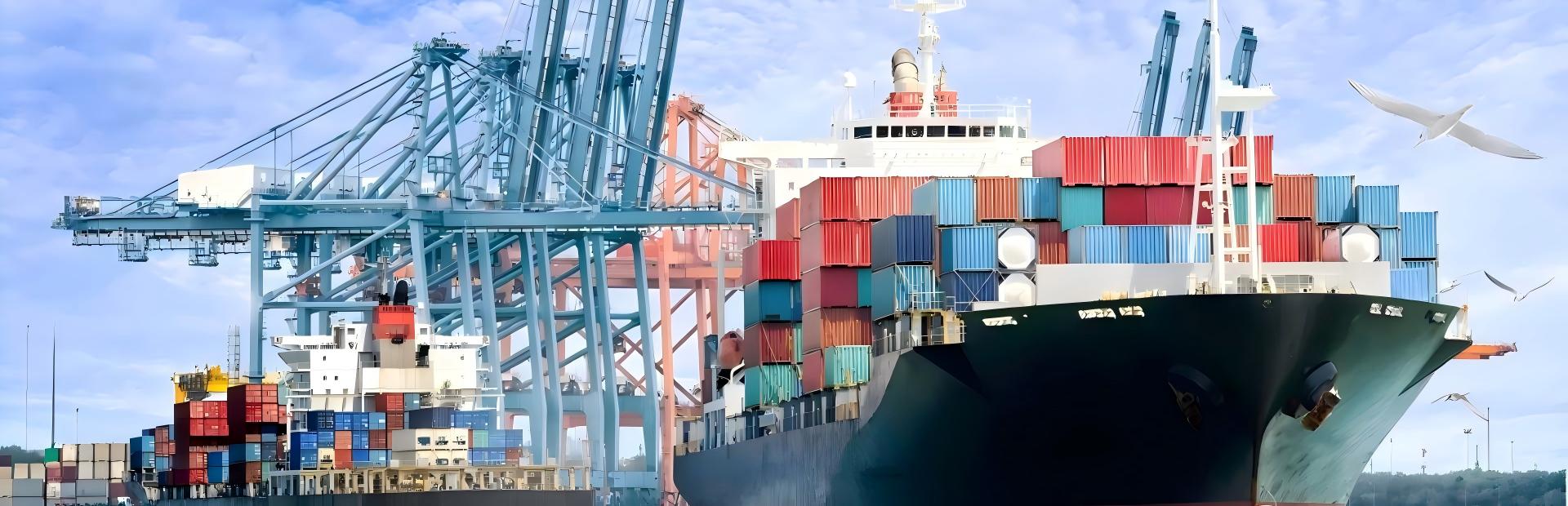
Importers can choose a reliable China-to-Italy freight forwarder by comparing route experience, shipping options, customs coordination, transparent pricing, destination coverage, and shipment visibility. The best partner should manage the complete logistics process according to cargo requirements, budget, and delivery deadlines.
A China-to-Italy freight forwarder coordinates the transportation of goods from Chinese suppliers to Italian destinations. Depending on the agreed service, the forwarder may arrange factory pickup, export customs clearance, international freight, import clearance coordination, and final delivery.
For Italian importers, wholesalers, manufacturers, and e-commerce businesses, a freight forwarder helps coordinate multiple logistics stages and reduces the need to manage every transport provider separately.
Common services include:
Sea freight for large or cost-sensitive shipments
Air freight for urgent or time-sensitive cargo
China-Europe railway shipping on suitable routes
Full Container Load (FCL) and Less than Container Load (LCL)
cargo consolidation from multiple Chinese suppliers
Customs clearance coordination
Door-to-door delivery across Italy
Not every freight forwarder performs all these services directly. Some coordinate with overseas agents, carriers, and customs representatives. Before booking, confirm which services are included and who is responsible for each stage.
The right freight forwarder should offer more than a competitive freight rate. Importers should assess the provider's operational capabilities, communication standards, cost transparency, and ability to manage the complete shipment.
Choose a forwarder familiar with China-to-Italy routes, origin handling procedures, and Italian destination requirements.
Ask whether the provider regularly handles shipments to Italy and whether it understands the documentation, customs coordination, and delivery arrangements relevant to the cargo.
Experience with the specific route and product category is more useful than a general claim of international shipping expertise.
A capable forwarder should recommend transportation based on shipment size, delivery deadlines, and total logistics cost.
| Shipping Method | Best Suited For | Main Consideration |
|---|---|---|
| Sea Freight | Large orders, machinery, bulky products | Often cost-effective for substantial cargo volumes |
| Air Freight | Urgent shipments and time-sensitive products | Faster international transit, usually at a higher cost |
| Railway Shipping | Eligible cargo on available China-Europe routes | May balance transit time and cost |
| Express Shipping | Samples, documents, and small parcels | Convenient integrated delivery services |
Actual transit times and availability depend on the route, carrier schedules, cargo restrictions, and customs arrangements.
The forwarder should explain how export customs procedures in China and import customs procedures in Italy will be coordinated.
Confirm whether customs declarations are submitted by the provider or an appointed customs representative.
The provider should also explain the documents needed, the information required from the importer, and how applicable duties and import VAT will be handled.
International shipments involve suppliers, carriers, customs representatives, terminal operators, and delivery companies.
Choose a provider that offers clear shipment updates, explains delays promptly, and identifies additional charges before they become unexpected expenses.
For repeat orders, consistent communication can help businesses coordinate production, purchasing, and warehouse operations.
Importers should compare quotations using the same cargo information, delivery destination, shipping method, and service scope.
A low international freight rate may exclude origin handling, destination charges, customs clearance, or final delivery.
Ask the forwarder to clarify the following:
Factory pickup in China
Origin warehouse and export handling
Export customs clearance
International transportation
Cargo insurance, where applicable
Destination port, airport, or terminal handling
Import customs clearance
Customs duties and import VAT
Inland delivery within Italy
Storage and other additional charges
For LCL shipments, check consolidation and deconsolidation fees. For FCL shipments, confirm container-related charges and applicable free-time conditions.
For air freight, verify the chargeable-weight calculation and whether pickup and delivery are included.
No. The lowest quotation may not provide the best overall value if important services are excluded or additional charges are unclear.
A more useful comparison considers total logistics cost, expected delivery time, customs coordination, cargo handling, and contingency arrangements.
For regular shipments, importers should also review actual delivery performance and recurring charges rather than judging a provider by a single quotation.
The appropriate shipping method depends on the cargo, budget, and required arrival date.
Sea freight is commonly suitable for furniture, machinery, household goods, and large wholesale shipments.
FCL may be economical when a shipment justifies a dedicated container. LCL is useful for smaller orders that do not require an entire container.
However, LCL consolidation and deconsolidation can increase handling time and charges.
Air freight is useful for urgent components, product samples, and time-sensitive inventory.
Importers should compare the complete air freight quotation with express shipping, particularly for small parcels or lightweight cartons.
Railway shipping may offer a balance between transit time and transportation cost on suitable China-Europe routes.
Before booking, confirm the actual route, terminal arrangements, service availability, and estimated door-to-door delivery time.
A reliable freight forwarder should explain the trade-offs between the available options rather than automatically recommending one transportation method.
Door-to-door shipping can simplify logistics by coordinating transportation from the Chinese supplier's premises to the agreed delivery address in Italy.
Depending on the service, the process may include:
Factory pickup in China
Export documentation and customs procedures
International transportation
Arrival handling in Italy
Import customs coordination
Final delivery to a warehouse or business address
Before booking, confirm exactly what the door-to-door quotation covers.
In particular, clarify whether import customs clearance, duties, VAT, unloading, delivery appointments, and special delivery requirements are included.
Door-to-door service does not automatically mean that every tax and charge is included.
DDP and DAP allocate different responsibilities between the seller and buyer under the agreed Incoterms rules. They do not override Italian or EU customs and tax requirements.
Under DDP Incoterms® 2020, the seller is responsible for arranging delivery to the named destination and handling import clearance, applicable duties, and taxes.
A freight forwarder may coordinate these services through destination partners. However, the parties must confirm that the proposed importer and tax arrangements are legally workable in Italy.
Under DAP, the seller arranges delivery to the named destination, while the buyer generally handles import clearance and applicable duties and taxes.
DAP may suit importers with established customs arrangements or their own Italian customs representative.
For both terms, the contract should identify the named destination, included services, and responsibility for customs declarations, duties, and taxes.
The required documents depend on the product, transport method, and customs procedure.
Common documents include:
Commercial invoice
Packing list
Bill of lading or air waybill, as applicable
Commodity code and customs valuation information
Country-of-origin details
EORI information where required
Product-specific certificates, declarations, or permits where applicable
Goods imported into Italy are subject to the relevant EU customs framework and applicable Italian tax and product requirements.
Some products may also require conformity documentation, licences, sanitary documentation, or other supporting evidence.
The freight forwarder should help coordinate the information needed for shipping and customs clearance. However, the importer remains responsible for providing accurate information and meeting applicable legal obligations.
Before committing to a provider, check its business information, service capabilities, destination network, and contractual terms.
Review the company's registration details and request relevant business information. Where appropriate, check its insurance arrangements, industry memberships, and any authorisations required for the services offered.
Ask whether the provider operates directly in Italy or works through local partners.
Using destination partners is common in international logistics, but the responsibilities of each party should be clearly explained.
The quotation should identify the transportation method, route, included services, excluded charges, estimated transit time, and payment terms.
Ask how the provider handles customs holds, missed departures, damaged cargo, and unexpected destination charges.
A reliable forwarder should explain how operational issues are escalated and who will communicate with the importer.
Ask for examples of similar cargo types, shipment volumes, and delivery requirements. References or documented performance information may provide additional confidence where available.
Importers can increase costs and operational risks by focusing only on the initial quotation or the provider's location.
Common mistakes include:
Choosing a provider based solely on the lowest freight rate.
Assuming every forwarder offers direct operations in Italy.
Comparing quotations with different service inclusions.
Failing to clarify customs declaration responsibilities.
Overlooking destination handling and final delivery fees.
Assuming DDP automatically resolves every import compliance issue.
Booking before confirming product restrictions and documentation.
Accepting unrealistic transit-time promises without checking the full delivery process.
The most effective approach is to compare the complete logistics service from the Chinese supplier to the final destination in Italy.
Use this checklist when requesting quotations from China-to-Italy freight forwarders.
Which transportation methods are suitable for the cargo?
What is the estimated door-to-door transit time?
Which origin and destination charges are included?
Who handles export and import customs procedures?
Are customs duties and import VAT included or payable separately?
Does the service include final delivery in Italy?
Which documents and product details must be provided?
Are there cargo restrictions or special handling requirements?
How are shipment updates and delays communicated?
What additional charges could arise during transportation?
Comparing providers against the same checklist makes quotations easier to evaluate and reduces the risk of overlooking important service differences.
For importers and wholesalers, logistics performance affects inventory availability, purchasing schedules, customer commitments, and profit margins.
A reliable freight forwarder helps coordinate suppliers, prepare shipping documents, select suitable transportation, manage customs arrangements, and improve shipment visibility.
For repeat orders, the provider should also review previous shipment performance, identify recurring cost issues, and recommend practical improvements.
Long-term cooperation is most valuable when the provider understands the business's cargo requirements and communicates clearly as shipping needs change.
Our team provides international logistics solutions including sea freight, air freight, railway shipping, cargo consolidation, customs clearance coordination, and door-to-door delivery.
Shipping arrangements can be tailored to supplier locations, cargo volume, destination requirements, and delivery deadlines.
Contact us to discuss your China-to-Italy shipment and receive a logistics plan suited to your business.