
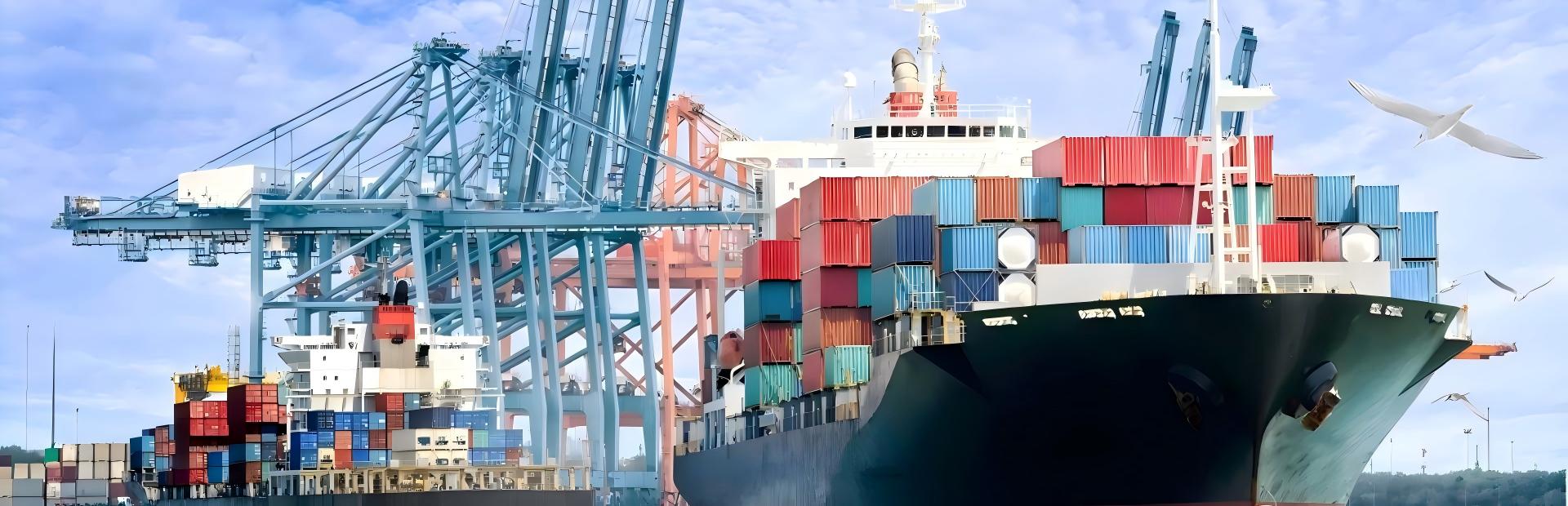
Goods imported from China into France must comply with EU customs rules, including accurate declarations, correct commodity codes, customs valuation, applicable duties, import VAT, and product-specific requirements before they can be released or sold.
France follows the European Union's common customs framework for goods imported from non-EU countries, including China. Importers must declare goods correctly, pay applicable import charges, and comply with relevant restrictions and product regulations.
The main requirements generally include:
A valid EORI number where required for customs activities
Accurate commercial invoices and transport documents
Correct commodity classification
Reliable customs valuation and country-of-origin information
Payment of applicable customs duties and import VAT
Product-specific licences, certificates, or compliance documents where required
Requirements vary according to the product category, customs procedure, shipment value, and intended use.
For French importers, wholesalers, manufacturers, and e-commerce sellers, customs preparation should begin before cargo leaves China. Correcting documentation before departure is usually easier than resolving discrepancies after goods arrive at a French port or airport.
French customs clearance is the process of declaring imported goods to the relevant customs authorities and satisfying the applicable requirements before release.
A typical import process includes five stages.
The exporter and importer prepare the necessary commercial and transport documents, including the commercial invoice, packing list, and bill of lading or air waybill.
Additional documents may be required depending on the product.
The importer or customs representative identifies the correct commodity code based on the product's material, function, construction, and intended use.
The classification helps determine applicable customs duties and other trade measures.
The importer or an appointed customs representative submits the declaration using the applicable customs procedure.
The declaration contains information about the goods, their value, origin, and relevant import arrangements.
Customs duties and import VAT are assessed according to the relevant rules. Other charges may apply depending on the shipment and services used.
Customs or other competent authorities may request supporting documents, conduct inspections, or verify compliance.
Goods can proceed once the relevant release requirements have been satisfied.
Yes. An Economic Operators Registration and Identification (EORI) number is generally required for businesses undertaking customs activities covered by EU EORI rules.
The EORI number identifies an economic operator in customs procedures.
Before shipping from china, importers should confirm:
Whether an EORI number is required for their role
Whether the number is valid for the relevant customs activity
Which company will act as the importer
Who will submit the customs declaration
Whether a customs representative has been appointed
An EORI number does not replace a customs declaration, import licence, or product compliance documentation.
Businesses should arrange the necessary registration before shipment to reduce avoidable administrative delays.
Customs duty depends on the product's classification, customs value, country of origin, and any applicable trade measures.
Chinese-origin goods do not all face the same customs duty rate.
Some products may be subject to additional measures, including anti-dumping duties, countervailing duties, or other trade restrictions.
Importers should check the applicable tariff for the exact product rather than relying on a general estimate for Chinese imports.
The EU's TARIC system provides information on customs tariffs and relevant trade measures.
Before shipping, importers should:
Identify the correct commodity code.
Confirm the declared country of origin.
Check the applicable customs duty rate.
Review any additional trade measures or restrictions.
Confirm whether supporting documents are required.
Official reference: European Commission — TARIC Customs Tariff.
Customs value is generally based on the transaction value, subject to the applicable customs valuation rules and adjustments.
Depending on the circumstances, relevant transportation, insurance, and other costs may need to be included.
The customs value is important because it is used to calculate customs duty and may also form part of the import VAT calculation.
Importers should retain supporting records such as:
Commercial invoices
Purchase orders and sales contracts
Freight and insurance invoices
Payment records
Other documents supporting the declared value
An inaccurate declared value can trigger customs queries, reassessment, additional charges, or penalties.
The declared value should reflect the transaction and applicable valuation rules rather than an arbitrary figure chosen to reduce import costs.
Import VAT is generally payable when goods enter France, subject to the applicable rules and any relevant exemptions or special procedures.
France generally applies a standard VAT rate of 20%. Reduced rates apply to certain eligible goods, depending on their classification and the applicable tax rules.
Import VAT is generally calculated using a taxable base that includes the customs value, applicable customs duties, and certain incidental expenses under the relevant rules.
For example, if customs duty applies, the import VAT calculation generally takes that duty into account rather than calculating VAT solely on the product purchase price.
VAT-registered businesses may be able to recover eligible import VAT, subject to the applicable requirements and proper documentation.
Importers should confirm the VAT treatment with a qualified tax adviser or the relevant French authorities when the transaction involves complex arrangements.
A certificate of origin is not required for every shipment. The need for origin documentation depends on the product, customs requirements, trade measures, and the transaction.
Country-of-origin information is important because it can affect:
Customs duties
Anti-dumping or countervailing measures
Import restrictions
Product-specific regulatory requirements
Importers should distinguish between the country from which goods are shipped and the country where they originate under the applicable origin rules.
Shipping goods through another country does not automatically change their origin.
Where customs authorities or a particular trade measure requires supporting evidence, importers should confirm the appropriate origin documentation before dispatch.
Customs clearance does not automatically mean that goods comply with all requirements for sale in France or elsewhere in the EU.
Products must meet the applicable safety, environmental, labelling, and sector-specific regulations.
| Product Category | Compliance Areas To Check |
|---|---|
| Electrical equipment | Applicable electrical safety and electromagnetic compatibility requirements |
| Machinery | Machinery safety and relevant technical documentation |
| Toys | Toy safety, chemical restrictions, and conformity requirements |
| Chemicals | REACH, CLP, and other applicable chemical controls |
| Food products | Food safety, sanitary requirements, and relevant import controls |
| Batteries | Applicable battery regulations and transport requirements |
| Medical devices | Relevant EU medical device legislation and authorisations |
| Products with environmental obligations | Applicable packaging, recycling, or extended producer responsibility rules |
This table provides examples rather than a complete list.
CE marking is required only for product categories covered by applicable EU legislation that requires it.
Where CE marking applies, importers should verify the relevant conformity assessment, technical documentation, declaration of conformity, and marking requirements.
A supplier's claim that a product is CE compliant should not replace the importer's own due diligence.
Depending on the product, additional labelling, testing, traceability, or registration obligations may apply.
The required documents depend on the product, transportation method, and customs procedure.
Common documents include:
Commercial invoice
Packing list, where applicable
Bill of lading or air waybill
Customs declaration information
Commodity code and customs valuation details
Country-of-origin information
EORI details where required
Product-specific certificates, licences, or permits where applicable
Additional documents may be needed for regulated goods, dangerous goods, or products subject to specific import controls.
The commercial invoice, packing list, and transport documents should contain consistent shipment details.
Discrepancies in product descriptions, quantities, package counts, weights, or consignee details can lead to requests for clarification and delays.
Importers should review the documents before dispatch and send the necessary information to the customs representative in advance.
The core customs rules generally apply regardless of whether goods arrive by sea or air. However, the operational arrangements and timing differ.
Sea freight is commonly used for large commercial orders, machinery, furniture, and bulk inventory.
Importers should coordinate shipping documents, arrival information, port handling, customs clearance, and final delivery.
LCL shipments may involve additional consolidation and deconsolidation procedures.
Air freight is commonly used for urgent orders, samples, and time-sensitive cargo.
Because air cargo may arrive sooner, importers should prepare accurate documents before departure and confirm customs arrangements in advance.
For both methods, customs release can be delayed by incomplete declarations, incorrect classification, or missing product compliance documents.
DDP and DAP allocate different responsibilities between the seller and buyer under the agreed Incoterms rules. They do not override French or EU customs law.
Under DDP Incoterms® 2020, the seller is responsible for arranging delivery to the named destination and handling import clearance, applicable duties, and taxes.
Before accepting DDP, the parties should confirm that the proposed importer and tax arrangements are legally workable in France.
Under DAP, the seller arranges delivery to the agreed destination, while the buyer generally handles import clearance and applicable duties and taxes.
DAP may suit businesses with their own customs arrangements or an established French customs representative.
For both terms, the contract should clearly identify the named destination, included services, and responsibility for customs declarations and taxes.
Several common mistakes can increase costs or delay cargo release.
Incorrect classification can result in duty discrepancies or additional customs checks.
Declared values that do not follow applicable valuation rules can trigger reassessment and requests for supporting evidence.
Regulated products may require technical documentation, permits, certificates, or other evidence.
Differences between invoices, packing lists, and transport documents can create customs queries.
Importers should confirm who submits declarations and pays duties and taxes before cargo departs.
Waiting until cargo arrives to collect missing documents increases the risk of storage charges and delivery delays.
The most effective prevention method is to check product classification, documentation, and compliance before the shipment leaves China.
Importers can reduce avoidable delays through early preparation and clear communication with their freight forwarder or customs representative.
Before dispatch, businesses should:
Verify the commodity code and applicable duty rate.
Confirm customs value and country of origin.
Prepare accurate commercial invoices and packing lists.
Confirm EORI and customs representation arrangements.
Check product-specific regulations and documentation.
Confirm who is responsible for import VAT and duties.
Send complete documents to the customs representative before arrival.
Allow sufficient time for inspections or additional checks where relevant.
For repeat shipments, maintaining verified product descriptions, classification records, and document templates can improve consistency.
A freight forwarder can coordinate transportation and help organise the documentation and customs processes required for shipments from China to France.
Depending on the agreed service, support may include:
Reviewing shipping documents for consistency
Coordinating export clearance in China
Arranging sea freight or air freight
Coordinating French customs clearance through the appropriate representative
Arranging payment procedures for applicable charges
Coordinating destination handling and final delivery
Importers should confirm which services the provider performs directly and which are handled by customs representatives or overseas partners.
The importer remains responsible for providing accurate information and meeting the legal obligations applicable to the transaction.
Use this checklist before cargo leaves China:
Confirm the correct commodity code.
Check customs duty and applicable trade measures.
Verify customs value and country of origin.
Prepare the commercial invoice and packing list.
Confirm EORI and customs declaration arrangements.
Check applicable import VAT treatment.
Verify product compliance and required certificates.
Clarify DDP or DAP responsibilities.
Confirm destination handling and delivery charges.
Send documents to the customs representative before arrival.
The exact requirements should be tailored to the product category, shipment details, and applicable customs procedure.
French import customs rules affect shipping costs, documentation, product compliance, and delivery planning. Our team provides international logistics solutions including sea freight, air freight, cargo consolidation, customs clearance coordination, and door-to-door shipping.
Contact us to discuss your product type, shipment volume, documentation requirements, and delivery destination in France.