
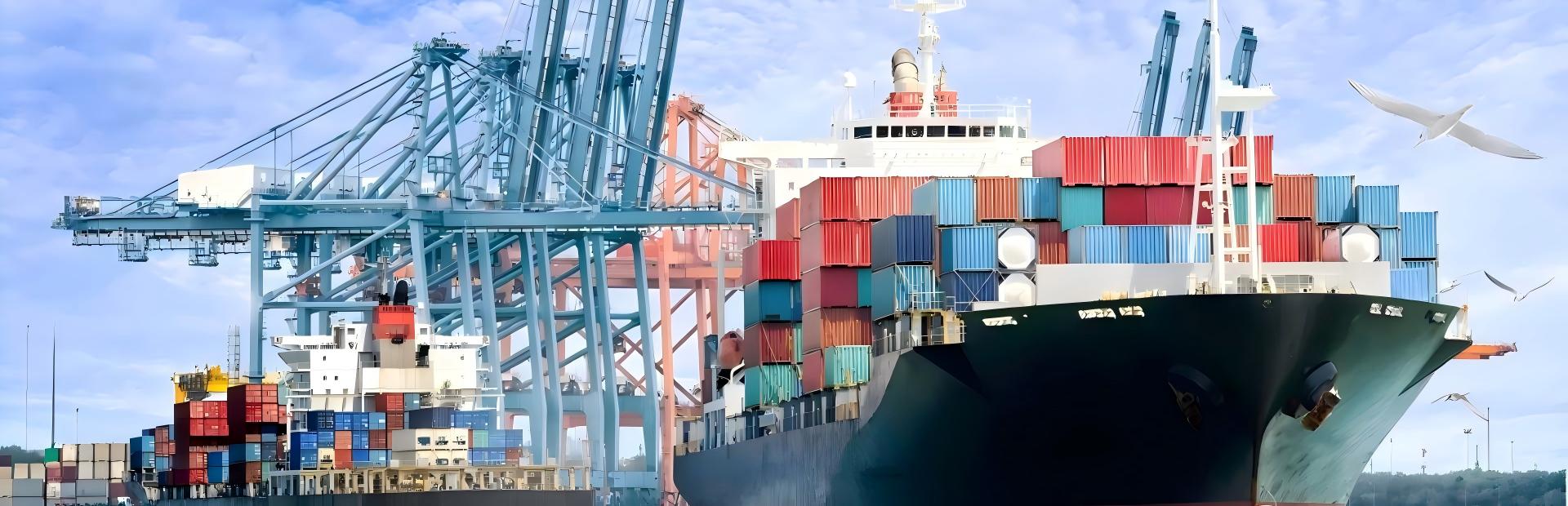
Importers can reduce European logistics risks by verifying suppliers, preparing accurate customs documents, checking product compliance, selecting reliable freight forwarders, and planning for delays, unexpected charges, and cross-border disruptions before shipping.
European import logistics involves multiple stages, including supplier production, export clearance, international transportation, import customs procedures, and final delivery. A problem at any stage can increase costs or delay the entire shipment.
The most common risks include:
Supplier risks: Inconsistent product quality, production delays, or incomplete shipping documents.
Transportation risks: Vessel delays, rail disruptions, capacity shortages, or unexpected route changes.
Customs risks: Incorrect commodity codes, inaccurate customs values, or missing declarations.
Compliance risks: Products that fail to meet applicable EU safety, labelling, or environmental requirements.
Financial risks: Unexpected destination charges, additional duties, storage fees, or currency fluctuations.
Delivery risks: Warehouse receiving problems, inaccurate delivery details, or missed delivery appointments.
For importers, risk management should begin before goods leave the supplier's facility. Resolving documentation, compliance, and delivery issues before dispatch is generally easier than addressing them after cargo arrives at a European port or terminal.
Supplier and product risks can create logistics problems long before transportation begins. Goods that do not match the purchase order may require rework, replacement, additional inspection, or return shipment.
Importers should evaluate a supplier's business credentials, production capabilities, quality management procedures, and export experience.
Useful checks include:
Confirming company registration and business details.
Reviewing production facilities and relevant certifications.
Requesting product specifications and approved samples.
Checking previous export experience and references where available.
Agreeing on inspection standards and acceptance criteria.
Supplier verification should be proportional to the order value, product risk, and complexity of the transaction.
Pre-shipment inspection can help identify defects before cargo enters international transportation.
For larger orders, importers can agree on inspection procedures covering product dimensions, materials, functionality, packaging, labelling, and order quantities.
The inspection scope should be documented in advance so that both parties understand the acceptance criteria.
A supplier's estimated completion date is not necessarily the date when cargo will be ready for collection.
Importers should confirm production completion, quality inspection, packaging, and document preparation before booking transportation.
This reduces the risk of missed departures, booking changes, and unnecessary storage charges.
Customs errors are a major source of preventable import delays. European Union customs procedures require accurate shipment information, appropriate declarations, and compliance with applicable import rules.
Before shipping, importers should confirm:
Correct commodity codes.
Accurate customs valuation.
Country-of-origin information.
Commercial invoices and packing lists.
Transport documents.
EORI registration where required.
Applicable customs duties and import VAT.
Additional licences, certificates, or permits where required.
Commodity classification affects customs duty rates and may determine whether additional trade measures, restrictions, or regulatory requirements apply.
Products that appear similar can have different classifications because of differences in material, function, or construction.
Importers should verify classifications using the relevant EU tariff resources and obtain professional advice when necessary.
Customs valuation must follow the applicable rules, and the declared country of origin must reflect the actual origin of the goods.
Importers should not assume that the country from which goods are shipped is automatically their country of origin.
Incorrect valuation or origin information can result in reassessment, additional charges, or further customs checks.
Commercial invoices, packing lists, and transport documents should contain consistent product descriptions, quantities, weights, and shipment details.
Sending complete information to the customs representative before arrival gives the parties more time to identify discrepancies and resolve missing information.
Customs release does not automatically mean that imported goods are legally compliant for sale in the European market.
Products must meet the requirements applicable to their category, intended use, and market placement.
| Product Category | Compliance Areas To Check |
|---|---|
| Electrical equipment | Applicable electrical safety, electromagnetic compatibility, and conformity requirements |
| Machinery | Applicable machinery safety and technical documentation requirements |
| Toys | Toy safety, chemical restrictions, and conformity obligations |
| Chemicals | REACH, CLP, and other relevant chemical controls |
| Food products | Food safety, sanitary requirements, and import controls |
| Batteries | Applicable battery regulations and transport requirements |
| Medical devices | Relevant EU medical device legislation and authorisations |
| Products with environmental obligations | Applicable packaging, recycling, or extended producer responsibility rules |
This is an illustrative list rather than a complete compliance checklist.
Where required, importers should obtain the relevant declarations of conformity, technical documentation, test reports, licences, or other evidence before dispatch.
CE marking applies to specified product categories, not every product imported into the EU. Importers should verify whether the relevant legislation requires CE marking and what supporting documentation is necessary.
Product labels may need to include information such as safety warnings, manufacturer details, importer information, language-specific instructions, or traceability identifiers.
The exact requirements depend on the product and applicable legislation.
Checking labels before mass production is generally more efficient than relabelling a large shipment after arrival.
Transportation risks can arise from capacity shortages, schedule changes, terminal congestion, weather, labour disruptions, and unexpected border procedures.
Importers can reduce exposure by selecting appropriate transport services and maintaining realistic delivery schedules.
The best transportation method depends on cargo volume, delivery deadlines, product characteristics, and budget.
Sea freight: Often suitable for large, heavy, or cost-sensitive shipments.
Rail freight: May provide a balance between transit time and cost on suitable China-Europe routes.
Air freight: Suitable for urgent, high-value, or time-sensitive cargo.
Express shipping: Often practical for small parcels, samples, and urgent documents.
Actual transit times depend on the route, service availability, handling arrangements, and customs procedures.
International transit time is only one part of the delivery schedule.
The complete timeline may include factory pickup, export clearance, terminal handling, international transportation, import clearance, and inland delivery.
Importers should plan inventory availability around the complete door-to-door timeline rather than relying solely on estimated port-to-port or terminal-to-terminal transit times.
For critical products, businesses can identify alternative routes, carriers, or transportation methods before a disruption occurs.
Where commercially justified, a company may use sea freight for regular inventory and air freight for urgent replacement stock.
The cost of this flexibility should be compared with the potential financial impact of a delayed delivery.
Unexpected charges can affect profit margins even when the original freight quotation appears competitive.
Importers should compare the complete logistics cost rather than focusing only on the international freight rate.
Common cost components include:
Factory pickup and origin handling.
Export documentation and customs procedures.
International freight.
Cargo insurance, where applicable.
Port, airport, or terminal handling.
Customs clearance fees.
Import duties and VAT.
Inland transportation.
Warehousing and storage.
Detention, demurrage, or other delay-related charges where applicable.
A reliable quotation should clearly identify included services, excluded charges, applicable surcharges, and the conditions under which additional fees may arise.
For LCL shipments, check consolidation and deconsolidation charges. For FCL shipments, confirm container-related charges and the applicable free-time conditions.
For air freight, verify the chargeable-weight calculation and whether final delivery is included.
Incoterms help allocate specified delivery obligations, costs, and risks between the seller and buyer.
Under DDP, the seller generally arranges import clearance and pays applicable duties and taxes under the agreed terms, while also needing to ensure the import arrangements are legally workable.
Under DAP, the seller arranges delivery to the named destination, while the buyer generally handles import clearance and applicable import charges.
Neither term removes statutory obligations imposed by customs or tax authorities.
The purchase contract and freight quotation should clearly identify the named destination and responsibilities for clearance, duties, VAT, and additional charges.
Cargo damage and loss can result from unsuitable packaging, improper loading, moisture exposure, inadequate securing, or handling errors.
Preventive measures should match the cargo's characteristics and transportation method.
Packaging should withstand expected stacking, vibration, handling, and environmental conditions during transportation.
For moisture-sensitive goods, importers may need suitable moisture barriers or other protective measures.
For heavy machinery or fragile equipment, packaging and securing arrangements should reflect the product's weight, centre of gravity, and handling requirements.
Importers should provide accurate cargo dimensions, weight, lifting points, stacking restrictions, and handling instructions.
Where necessary, confirm whether the cargo requires pallets, crates, special loading equipment, or temperature-controlled transportation.
Importers should evaluate whether cargo insurance is appropriate for the shipment's value and risk profile.
Before purchasing cover, check the insured value, coverage conditions, exclusions, deductible, and claims documentation requirements.
Cargo insurance does not automatically cover every loss or delay, so the actual policy terms matter.
A suitable freight forwarder can help coordinate transportation, documentation, customs arrangements, and destination delivery.
However, service scope and operational capabilities vary between providers.
Importers should assess the following factors before committing to a logistics partner.
Confirm experience with the relevant China-to-Europe route, cargo type, and transportation method.
Ask who prepares or submits customs declarations and how the provider coordinates with the importer or customs representative.
Check whether quotations clearly separate international freight, handling, customs services, taxes, and final delivery.
Confirm how shipment milestones, delays, and exceptions are communicated.
Verify that the provider can arrange delivery to the actual warehouse, distribution centre, factory, or commercial address.
Ask how the provider handles missed departures, customs holds, damaged cargo, and route disruptions.
A broad European network can be useful, but importers should verify the provider's actual coverage in the countries and locations relevant to their business.
Importing into one EU country and distributing goods across several European markets can introduce additional operational and compliance requirements.
Although the EU has a common customs framework, national VAT administration, product-related obligations, transport arrangements, and local procedures may differ.
Businesses distributing inventory across multiple countries should:
Confirm the customs procedure used when goods enter the EU.
Verify the destination and status of goods before onward movement.
Check VAT registration and reporting obligations.
Review product labelling and market-specific requirements.
Confirm warehouse capabilities and delivery arrangements.
Maintain consistent shipment and inventory records.
Importers should also distinguish EU member states from non-EU European destinations. Countries outside the EU may have separate customs procedures, import taxes, and documentation requirements.
A logistics plan that works for Germany may therefore require adjustments when serving the United Kingdom, Switzerland, or other non-EU markets.
A practical checklist helps businesses identify problems before they affect shipment schedules or costs.
Verify the supplier and agreed product specifications.
Confirm production completion and cargo-ready dates.
Arrange inspection where appropriate.
Check packaging and cargo protection requirements.
Verify commodity codes, customs value, and origin.
Prepare invoices, packing lists, and transport documents.
Confirm EORI and customs representation arrangements.
Check applicable product compliance requirements.
Compare complete freight quotations.
Confirm Incoterms and responsibility for import charges.
Allow sufficient time for customs clearance and delivery.
Review cargo insurance and claims procedures.
Establish contingency arrangements for critical shipments.
The checklist should be adapted to the product, destination country, shipment value, and business risk tolerance.
Import risk management is most effective when it becomes part of the regular purchasing and shipping process.
Businesses that maintain accurate product records, standardise shipping documents, review supplier performance, and track logistics costs can identify recurring problems earlier.
For repeat imports, useful practices include maintaining verified commodity codes, documenting packaging specifications, recording actual transit times, and reviewing unexpected charges after each shipment.
These records help importers improve future purchasing decisions and negotiate logistics services based on actual operating requirements.
Our team provides international logistics solutions including sea freight, rail freight, air freight, cargo consolidation, customs clearance coordination, and door-to-door shipping.
Shipping arrangements can be tailored to cargo type, shipment volume, destination requirements, and delivery deadlines, helping importers coordinate the key stages of international transportation.
Contact us to discuss your China-to-Europe shipments and develop a logistics plan suited to your business.