
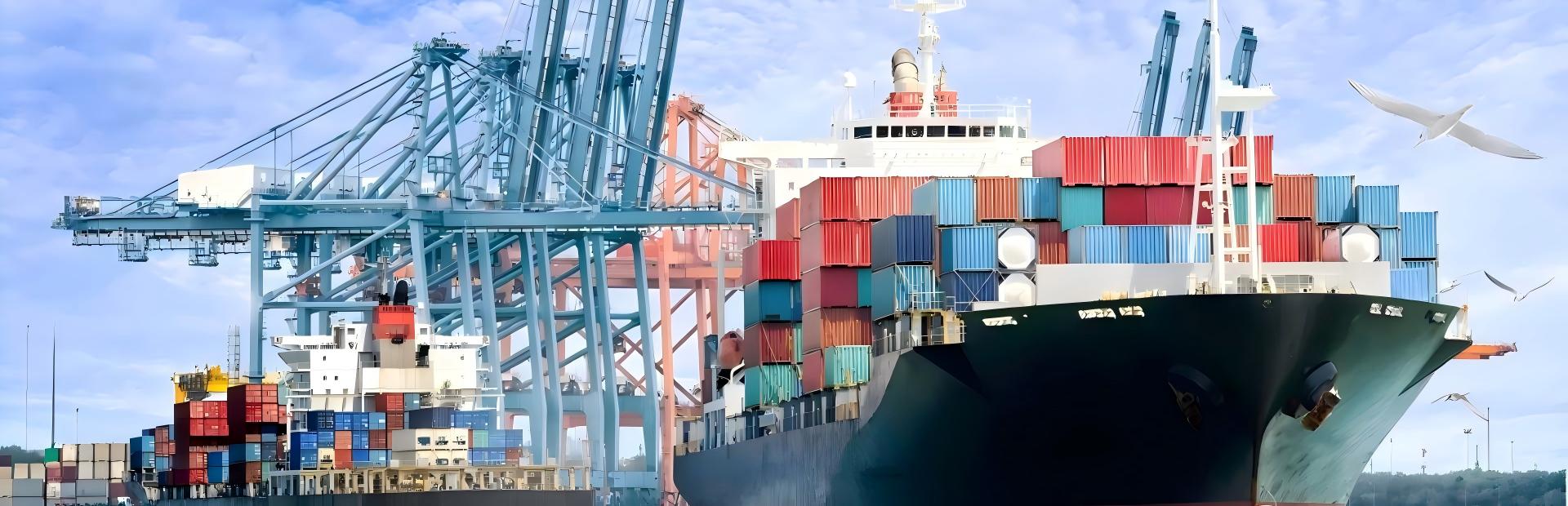
Full Container Load (FCL) is generally more cost-effective for large shipments that use most of a container, while Less Than Container Load (LCL) usually reduces upfront costs for smaller shipments by sharing container space with other cargo.
FCL and LCL are two common ocean freight options for businesses shipping goods internationally.
Full Container Load (FCL) means a shipment uses a dedicated container. The container is allocated to one shipper's cargo, although it does not necessarily need to be filled completely.
Less Than Container Load (LCL) means a shipment shares container space with cargo from other shippers. The freight forwarder consolidates compatible shipments into a container.
The main difference is how container capacity and associated charges are allocated.
| Comparison Factor | fcl shipping | LCL Shipping |
|---|---|---|
| Container space | Dedicated to one shipment | Shared among multiple shipments |
| Best suited for | Larger cargo volumes | Smaller shipments |
| Cost structure | Usually based on container and route charges | Often based on chargeable volume or weight, plus handling |
| Cargo handling | Generally fewer consolidation transfers | Requires consolidation and deconsolidation |
| Transit time | Often fewer consolidation-related steps | May take longer because of additional handling |
| Shipment planning | Suitable for larger planned orders | Suitable for smaller or more frequent orders |
For importers, the right choice depends on the shipment's volume, total logistics cost, delivery deadline, and inventory requirements.
FCL is generally more economical per cubic meter when a shipment uses a substantial portion of a container. LCL is usually more practical for smaller shipments because the importer pays for a share of the container rather than booking an entire container.
However, the lowest initial freight quotation does not always produce the lowest total shipping cost.
LCL may involve consolidation, deconsolidation, warehouse handling, documentation, and destination charges. FCL may involve container-related costs, including terminal handling, container movement, and possible detention or demurrage charges.
A reliable comparison should include all relevant origin, international freight, destination, customs, and delivery charges.
FCL is often suitable when:
Cargo volume is large enough to justify a dedicated container.
The shipment contains heavy or bulky products.
The importer regularly places large purchase orders.
The cargo needs fewer consolidation-related handling steps.
The total FCL quotation is lower than the equivalent LCL quotation.
LCL is generally suitable when:
Cargo volume is relatively small.
A full container would leave substantial unused space.
The importer is testing a new product.
Orders come from different suppliers.
The business wants to avoid waiting until enough cargo accumulates for a full container.
The break-even point varies by route, container type, cargo dimensions, and local charges. Importers should request FCL and LCL quotations for the same shipment before making a decision.
There is no universal volume at which FCL automatically becomes cheaper than LCL. The break-even point depends on the route, container size, LCL rate, and fixed charges.
For planning purposes, businesses commonly compare their cargo against a 20-foot or 40-foot container, but the actual decision should be based on usable capacity, cargo weight, and the complete quotation.
A practical comparison involves three steps:
Obtain an LCL quotation based on the shipment's chargeable volume or weight.
Obtain an FCL quotation for the appropriate container size.
Compare the total cost, including origin handling, destination charges, and final delivery.
For example, a shipment occupying a few cubic meters may be more economical as LCL. As volume increases, the LCL charges may approach or exceed the cost of a dedicated container.
The correct break-even point should be calculated using actual route-specific prices rather than a fixed industry-wide threshold.
LCL shipping charges are generally based on the shipment's volume, weight, and applicable minimum billing rules.
Ocean freight forwarders commonly use a revenue-ton or weight-measurement system, where one cubic meter and one metric ton may be treated as equivalent units for rating purposes. The applicable tariff and local charging rules determine the final billable quantity.
A simplified example:
Cargo volume: 4 cubic meters
Gross weight: 2 metric tons
Illustrative rating basis: 1 cubic meter or 1 metric ton, whichever produces the higher chargeable quantity
Under this example, the shipment would be rated on 4 revenue tons before considering minimum charges, handling, and other fees.
The final quotation may include:
Origin consolidation charges
Export handling
Ocean freight
Destination deconsolidation
Terminal and documentation fees
Final delivery
The exact billing method varies by provider and route. Some charges are calculated separately from the ocean freight rate, so importers should request a complete breakdown.
A fair comparison should consider the entire shipping process rather than ocean freight alone.
| Cost Component | FCL | LCL |
|---|---|---|
| Factory pickup | Depends on cargo and location | Depends on cargo and location |
| Origin handling | Container-related charges may apply | Consolidation and cargo handling may apply |
| International freight | Generally quoted per container | Generally quoted by chargeable volume or weight |
| Destination handling | Container and terminal charges may apply | Deconsolidation and handling charges may apply |
| Customs clearance | Charged according to the service arrangement | Charged according to the service arrangement |
| Inland delivery | Depends on container and delivery requirements | Depends on cargo and delivery requirements |
| Storage and delays | Container detention or demurrage may apply | Warehouse storage or handling charges may apply |
FCL quotations should identify which container-related charges are included. LCL quotations should identify minimum charges and origin and destination handling fees.
Importers should also check whether customs clearance, cargo insurance, and final delivery are included or billed separately.
FCL can be faster in some situations because the cargo does not need to be consolidated with shipments from multiple customers or deconsolidated at destination.
However, FCL is not automatically faster on every route. Vessel schedules, port congestion, customs clearance, and inland transportation can affect both methods.
LCL may take additional time because of:
Waiting for sufficient cargo to complete consolidation
Warehouse handling
Container loading and unloading
Destination deconsolidation
Additional cargo release procedures
For businesses with strict delivery deadlines, the comparison should use the expected door-to-door transit time rather than the advertised ocean transit time alone.
Both FCL and LCL can be suitable for commercial cargo when the goods are packed and handled correctly.
FCL may reduce certain handling steps because the container is allocated to one shipment. LCL requires cargo to be consolidated with other shipments, which can increase the number of handling stages.
For fragile, high-value, or easily damaged products, importers should consider:
Packaging strength
Palletization requirements
Cargo securing
Moisture protection
Handling instructions
Cargo insurance coverage
FCL does not eliminate risks associated with poor packaging, improper loading, theft, or transportation damage. Likewise, LCL is not inherently unsafe when managed by an experienced consolidator.
The appropriate option depends on the product's risk profile and the available handling arrangements.
FCL is often the better option for larger commercial shipments that can justify a dedicated container.
Typical examples include:
Factories and wholesalers shipping large quantities of products may benefit from the cost efficiency of containerized transportation.
Machinery, furniture, and other large products may use container capacity more efficiently through FCL.
Businesses with predictable demand can schedule full-container shipments to support purchasing and warehouse planning.
FCL can be useful when reducing consolidation-related handling is an operational priority.
Before booking, importers should confirm container dimensions, maximum payload, loading limits, and whether the cargo can be loaded and unloaded at the intended locations.
LCL is often preferable when a shipment does not justify a dedicated container.
It is suitable for:
Businesses testing a product or supplier can ship smaller quantities without waiting to accumulate a full container.
Importers purchasing limited quantities can use shared container space instead of paying for an entire container.
Where available, consolidation services may combine compatible cargo from different suppliers into one shipment.
Smaller shipments can help businesses avoid committing too much capital to inventory before demand is established.
However, frequent LCL shipments may create repeated handling and documentation costs. Importers should compare the cost of several small shipments with the cost of consolidating cargo into one larger shipment.
Yes. Many businesses use both methods depending on order size, product demand, and delivery requirements.
For example, an importer may ship high-volume products by FCL while sending smaller product lines or urgent trial orders by LCL.
A mixed strategy can help businesses:
Reduce transportation costs for bulk products
Avoid unnecessary inventory accumulation
Test new products before increasing order volumes
Consolidate smaller shipments where practical
Maintain flexibility across different product categories
The right approach should be reviewed regularly as order volumes and sales patterns change.
FCL and LCL shipments are both subject to applicable import customs requirements.
The documentation typically includes:
Commercial invoice
Packing list
Bill of lading
Correct commodity codes
Customs valuation and origin information
Certificates or permits when required
LCL shipments may involve additional coordination because several consignments share one container. Each shipment must still be correctly identified and processed under the relevant customs procedures.
FCL can simplify some cargo coordination, but it does not exempt the importer from customs documentation, duties, taxes, or product compliance requirements.
Importers should confirm who handles customs declarations and whether clearance fees are included in the quotation.
Businesses can reduce shipping costs by matching shipment size, purchasing frequency, and transportation arrangements.
Combining compatible shipments may reduce repeated handling and improve container utilization.
Reducing unnecessary packaging volume can lower LCL chargeable volume and improve container space utilization.
Advance planning can help businesses compare consolidation opportunities instead of shipping small quantities urgently.
Request a breakdown of origin charges, international freight, destination fees, customs services, and delivery.
Frequent LCL shipments may be more expensive than a planned FCL shipment, but holding excess inventory also creates costs. Compare both transportation and inventory expenses.
Accurate dimensions, weight, packaging, and cargo descriptions help prevent revised charges and avoidable delays.
Use this checklist before booking:
Confirm cargo volume, weight, and dimensions.
Check the suitable container type and loading limits.
Obtain comparable FCL and LCL quotations.
Confirm origin and destination handling charges.
Check customs clearance and final delivery costs.
Review the expected door-to-door transit time.
Confirm packaging and cargo protection requirements.
Check potential storage, detention, or demurrage charges.
Consider inventory costs and delivery deadlines.
This process helps importers select a shipping method based on actual business requirements rather than a headline freight rate.
A reliable freight forwarder helps businesses compare container options, coordinate cargo handling, prepare shipping documents, and manage customs and delivery arrangements.
Useful services include:
FCL and LCL ocean freight
Cargo consolidation
Factory pickup
Export documentation coordination
Customs clearance coordination
Destination delivery
Transparent quotations and shipment tracking
For importers, the right provider should explain the cost differences clearly and identify the shipment volume at which FCL may become more economical than LCL.
Our team provides international logistics solutions including FCL and LCL sea freight, cargo consolidation, air freight, customs clearance coordination, and door-to-door delivery. Shipping arrangements can be tailored to cargo volume, supplier locations, destination requirements, and delivery deadlines.
Contact us to discuss your shipment and receive a suitable logistics plan.