
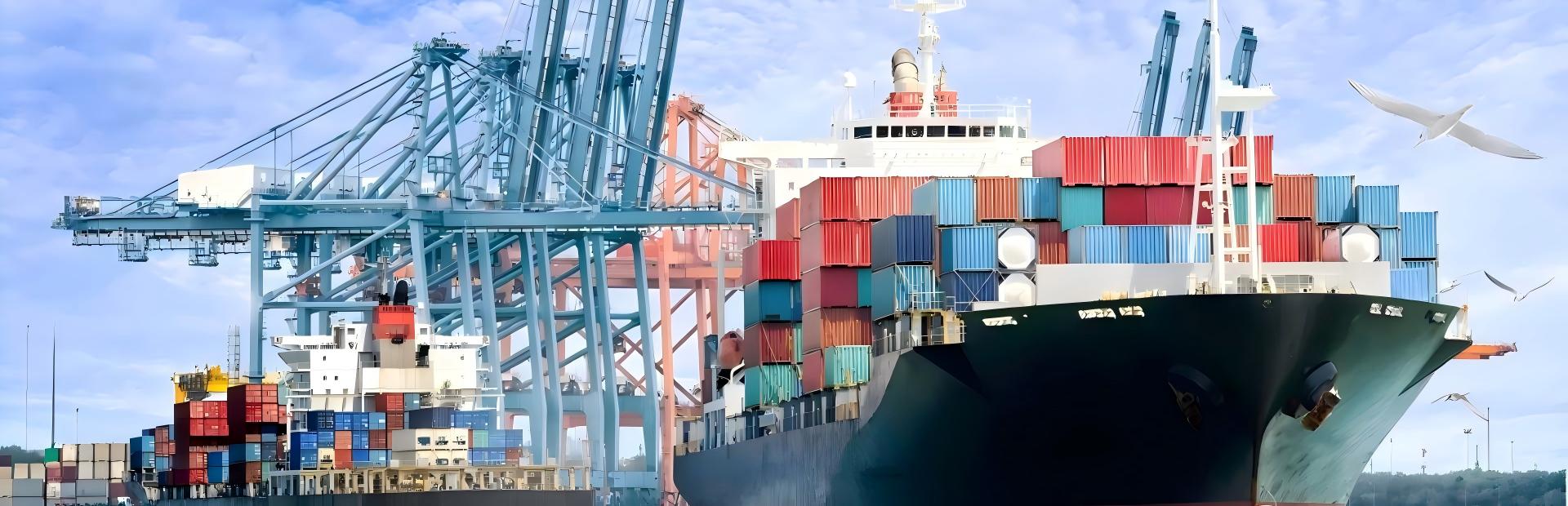
Chinese products imported into Germany must comply with EU customs rules, including accurate customs declarations, correct commodity codes, applicable duties and import VAT, and product-specific regulations.
Germany follows the European Union's common customs framework for goods imported from non-EU countries, including China. Importers must complete the required customs procedures before goods can be released for free circulation in the EU market.
The main requirements include:
Accurate commercial invoices and packing lists
Correct customs commodity codes
A valid customs value and country of origin
Applicable customs duty and import VAT
An EORI number where required
Product-specific licences, certificates, or compliance documents when applicable
Requirements vary by product category, shipment value, and intended use. Importers should verify the applicable rules before dispatch rather than waiting until cargo arrives in Germany.
The documents required depend on the shipment and the products being imported. Most commercial shipments require the following core documents.
The commercial invoice records the transaction between the Chinese supplier and the German buyer. It should include:
Exporter and importer details
Detailed product descriptions
Quantity and unit price
Total transaction value and currency
Country of origin
Applicable delivery terms
Product descriptions should be specific enough to identify the actual goods. Descriptions such as "accessories" or "general products" may not provide sufficient information for customs classification.
The packing list identifies the shipment's physical contents, including package quantity, gross weight, net weight, and dimensions where applicable.
The information should match the actual cargo and other shipping documents to reduce the risk of customs queries.
Sea freight shipments normally use a bill of lading, while air freight shipments use an air waybill.
These documents support transportation, cargo identification, and release procedures.
Certain products may require additional documents, including:
Certificates of origin where relevant
Product conformity documentation
Import licences
Health or phytosanitary certificates
Safety data sheets for applicable chemicals
The exact requirements should be checked against current EU and German import rules for the specific product.
Yes. Businesses conducting customs-related activities in the EU generally need an Economic Operators Registration and Identification (EORI) number.
An EORI number is used to identify economic operators in customs procedures. Importers should confirm that the correct number is available and that the importer details match the customs declaration.
Before shipping from china to Germany, businesses should check:
Whether the importer needs an EORI number
Whether the number is valid
Who will submit the customs declaration
Whether a customs representative has been appointed
Using a freight forwarder does not automatically eliminate the importer's registration or compliance obligations.
Customs duty depends primarily on the product's commodity code, customs value, origin, and any applicable trade measures.
The calculation generally involves three steps.
The EU Combined Nomenclature and TARIC system provide the classification framework used to determine applicable customs measures.
Classification depends on factors such as:
Product materials
Function and intended use
Construction
Technical characteristics
Products that appear similar may have different duty rates because their materials or functions differ.
The customs value is generally based on the transaction value, subject to the applicable valuation rules and adjustments.
International transportation and insurance costs up to the relevant EU entry point may need to be included, depending on the circumstances.
Importers should check the current EU TARIC database or the European Commission's Access2Markets portal using the correct product code and China as the country of origin.
Additional measures, such as anti-dumping or countervailing duties, may apply to certain Chinese products.
Official reference: EU Access2Markets.
Germany generally applies a standard import VAT rate of 19%, while a reduced rate of 7% applies to certain eligible goods.
The applicable rate depends on the product category and relevant tax rules.
Import VAT is generally calculated on a taxable import base that includes the customs value, applicable customs duties, and certain incidental expenses as required by German VAT law.
Importers should consider the following:
Product value and customs valuation
International freight and insurance where applicable
Customs duty
Other costs included in the taxable import base
Whether a reduced VAT rate applies
Businesses registered for VAT may be able to deduct eligible import VAT as input tax, subject to the relevant requirements and documentation.
Import VAT should therefore be considered separately from customs duty when calculating the total landed cost.
Importers should not assume that low-value shipments are automatically exempt from customs duty.
As of 1 July 2026, the previous EU customs duty relief for consignments valued at no more than €150 has been removed under the applicable transitional arrangements. A temporary €3 customs duty per item category applies to qualifying consignments under the relevant rules from 1 July 2026 through 1 July 2028.
The precise treatment depends on the shipment, the applicable legal provisions, and the type of consignment. Import VAT may also apply.
This change is particularly important for e-commerce sellers, small-parcel importers, and businesses shipping low-value products from China.
Importers should verify the current rules before calculating landed costs rather than relying on older guidance stating that all shipments below €150 are duty-free.
Official reference: German Federal Ministry of Finance — Removal Of The €150 Customs Duty Relief.
Not all products can enter Germany under the same conditions. Certain categories require additional checks, certificates, or regulatory procedures.
| Product Category | Key Areas To Check |
|---|---|
| Electrical equipment | Applicable electrical safety and conformity requirements |
| Machinery | Machinery safety and applicable conformity obligations |
| Toys | Toy safety, chemical restrictions, and required conformity documentation |
| Food products | Food safety, labelling, and applicable sanitary requirements |
| Chemicals | REACH, CLP, and other applicable chemical controls |
| Batteries | Applicable battery, chemical, and transport requirements |
| Medical devices | Relevant EU medical device requirements and authorisations |
| Wooden packaging | Applicable ISPM 15 treatment and marking requirements |
These examples are not exhaustive. Requirements depend on the exact product, its intended use, and applicable EU legislation.
Importers should verify compliance before placing an order or arranging transportation. Customs clearance alone does not establish that a product is legally permitted to be sold in Germany.
The typical import process involves several stages.
The Chinese supplier prepares the products, commercial invoice, packing list, and other documents required for the shipment.
The importer or appointed representative checks the commodity code, customs value, origin, applicable duty, and product-specific requirements.
The freight forwarder books sea freight or air freight and coordinates the required transport documentation.
The customs declaration is submitted through the applicable customs procedure, either by the importer or an authorised representative.
Applicable customs duty, import VAT, and other charges are handled according to the relevant procedures.
Once the necessary customs requirements are satisfied, the goods can be released for free circulation or moved under another authorised customs procedure.
Incomplete documents, incorrect commodity codes, or outstanding regulatory requirements may delay the process.
Both sea freight and air freight are subject to applicable German and EU customs rules. The main differences relate to transportation operations and timing.
Sea freight is commonly used for:
Large commercial shipments
Full container loads
Less than container load shipments
Machinery and industrial equipment
Wholesale inventory
Because ocean transit is generally longer, importers can use the time to confirm documents, classification, and clearance arrangements before arrival.
Air freight is often used for:
Urgent orders
Product samples
High-value goods
Time-sensitive components
Air cargo arrives more quickly, so customs information should be prepared before departure whenever possible.
The shipping method does not remove customs obligations. Product classification, valuation, documentation, and regulatory compliance remain essential for both modes.
Many avoidable customs problems originate before the goods leave China.
An incorrect code may result in the wrong duty rate or additional customs checks.
Undervaluation or inconsistent transaction information may trigger further review.
Missing invoices, unclear descriptions, or inconsistent packing details can delay declarations.
Regulated goods may be held if required certificates, permits, or supporting information are unavailable.
If the importer and freight forwarder have not agreed who handles declarations and payments, clearance may be delayed.
The most effective preventive measure is to verify shipment details before dispatch.
Importers can reduce avoidable delays by following a structured preparation process.
Confirm the correct commodity code before booking.
Prepare an accurate commercial invoice and packing list.
Verify the customs value and country of origin.
Check current duty rates and additional trade measures.
Confirm EORI and customs representation arrangements.
Obtain required product certificates or licences.
Clarify who pays customs duty and import VAT.
Send complete documents to the freight forwarder before cargo arrival.
This process is especially valuable for businesses importing repeatedly from Chinese manufacturers. Consistent documentation reduces repeated corrections and improves shipment planning.
Yes. A freight forwarder can coordinate German customs clearance directly where authorised and operationally equipped to do so, or through a customs representative.
Services may include:
Reviewing shipping documents
Coordinating commodity code information
Arranging customs declarations
Communicating with customs representatives
Coordinating duty and tax payment arrangements
Organising final delivery
Importers should confirm whether customs clearance is included in the quotation and whether the provider can support the specific product category.
The importer remains responsible for providing accurate information and meeting the legal obligations that apply to the transaction.
A reliable logistics partner should understand both origin-side export operations and destination-side import requirements.
Before booking, evaluate:
Route experience: Experience with China-to-Germany shipments
Customs support: Clear arrangements for EU import declarations
Cost transparency: Separate details for freight, duties, VAT, and handling
Transportation options: Sea freight, air freight, and cargo consolidation
Product knowledge: Experience with the relevant goods
Communication: Timely updates and clear responsibility for resolving issues
Delivery capability: Coordination with German warehouses or final destinations
The best provider is not necessarily the one offering the lowest freight rate. It is the one that can coordinate the complete shipment with clear responsibilities and realistic cost estimates.
Importing Chinese products into Germany requires accurate documentation, appropriate customs classification, and compliance with applicable EU and German regulations. Our team provides international logistics solutions including sea freight, air freight, customs clearance coordination, cargo consolidation, and door-to-door shipping.
Contact us to discuss your product type, shipment volume, and German delivery requirements.