
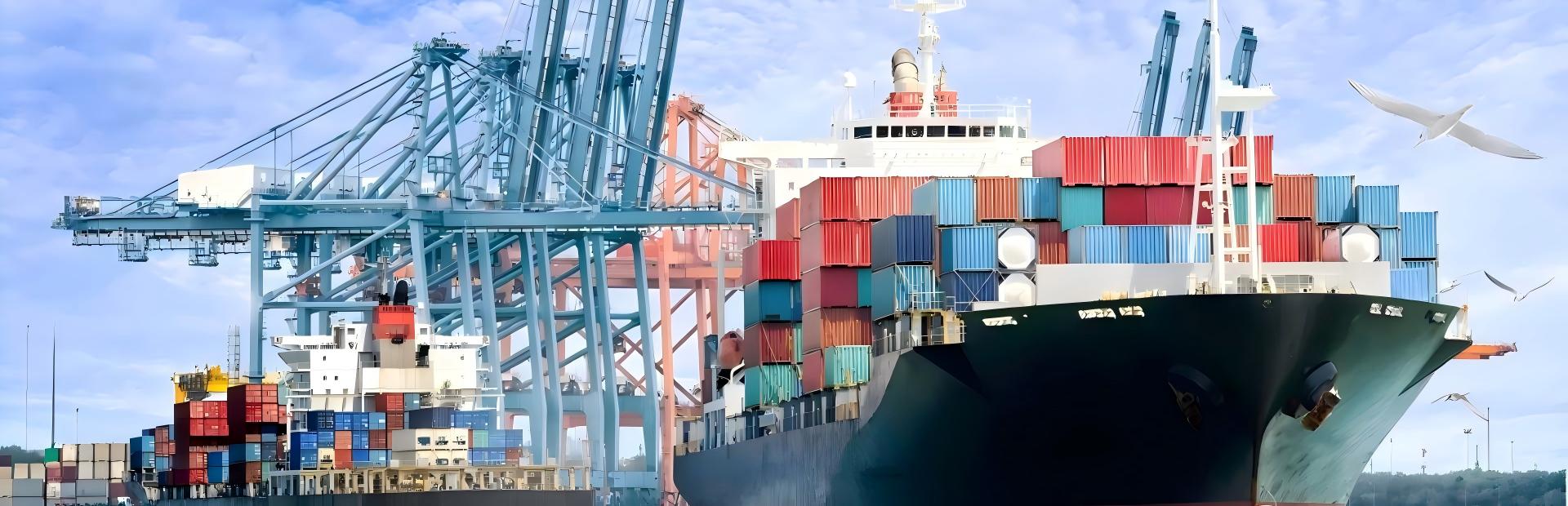
China freight forwarders specialize in supplier coordination, export procedures, and cargo consolidation at origin, while Germany freight forwarders often focus on European import clearance, local distribution, and destination-side logistics.
The main difference lies in their position within the international supply chain. China freight forwarders typically manage logistics near manufacturing facilities and export ports, while Germany freight forwarders provide support closer to the destination market.
For businesses shipping goods from China to Germany, the two types of providers may offer different advantages.
China freight forwarders commonly support:
Factory pickup and supplier coordination
Export documentation and customs procedures
Cargo consolidation from multiple suppliers
International sea freight and air freight arrangements
Shipment preparation before departure
Germany freight forwarders commonly support:
Import customs clearance coordination
German and European distribution
Local transportation and warehousing
Delivery to commercial addresses or distribution centers
Destination-side logistics management
These are general service patterns rather than strict limitations. Many international freight forwarders operate networks in both countries and can coordinate the complete shipping process.
China freight forwarders are often positioned close to manufacturers, suppliers, and major export gateways. This can be particularly useful for importers purchasing from several factories.
A China-based freight forwarder can arrange cargo collection from factories, supplier warehouses, or consolidation centers.
This is useful when an importer purchases different products from multiple Chinese suppliers. Instead of arranging separate international shipments, the goods may be collected and consolidated where operationally suitable.
China freight forwarders can coordinate export documentation and customs procedures, including the preparation and verification of relevant shipment information.
Typical documents include:
Commercial invoices
Packing lists
Bills of lading or air waybills
Export declarations and supporting documents when required
Accurate information helps reduce avoidable export delays.
China freight forwarders commonly arrange sea freight, air freight, and other international transportation services.
Their local supplier network can also help coordinate cargo readiness, packaging details, and shipping schedules before departure.
Germany freight forwarders often focus on the import and distribution stages after cargo reaches Europe.
Goods entering Germany from China generally require the appropriate customs declaration and must meet applicable EU and German import requirements.
A Germany-based freight forwarder may coordinate with customs representatives to help manage:
Import declarations
Customs valuation information
Commodity code verification
Customs duty and import VAT arrangements
Supporting documents for regulated products
The exact service depends on the provider and the importer's arrangements.
For companies serving German customers, local logistics services may include:
Short-term or long-term storage
Pallet handling
Order preparation
Domestic transportation
Delivery to retailers or distribution centers
These services can be valuable for businesses that maintain inventory in Germany or supply customers across the European market.
A Germany freight forwarder may have access to local trucking networks and distribution services. This can help coordinate the final stage between a port, airport, warehouse, and the buyer's premises.
A China freight forwarder often has a practical advantage when shipments require extensive coordination with Chinese suppliers.
This is particularly relevant when:
Cargo comes from several factories.
Suppliers have different production schedules.
Packaging or shipping marks need to be checked before dispatch.
Goods need consolidation before international transportation.
Export documents require corrections before departure.
For example, an importer purchasing machinery components from one factory and accessories from another may benefit from a China-based provider that can coordinate collection and consolidate the cargo before shipping.
However, experience with the specific product category and export route matters more than the provider's location alone.
A Germany-based freight forwarder may be better positioned to support destination-side operations, particularly when the shipment requires local delivery, warehousing, or coordination with German service providers.
Importers should check whether the provider can support:
EU customs procedures applicable to goods entering Germany
German import VAT arrangements
Product-specific regulatory requirements
Local delivery and warehouse coordination
Communication with the appointed customs representative
Germany is part of the European Union customs territory. Therefore, imports from China must be assessed under the relevant EU customs framework, together with applicable German procedures and national tax requirements.
A German provider does not automatically guarantee compliance. The importer's legal responsibilities, the provider's actual service scope, and the product's regulatory requirements must still be confirmed.
Neither option is automatically cheaper. Total logistics cost depends on the services included, shipment characteristics, route, and final destination.
| Cost Factor | China Freight Forwarder | Germany Freight Forwarder |
|---|---|---|
| Factory pickup in China | May offer convenient local coordination | May arrange through overseas partners |
| Export handling | Often managed close to origin | Usually coordinated through origin agents |
| International freight | Can arrange carrier bookings | Can arrange through its network |
| Import clearance in Germany | May coordinate through a German partner | May coordinate with local customs specialists |
| German warehousing | Depends on its local network | May offer direct local services |
| Final delivery | Depends on destination partners | May offer direct local coordination |
When comparing quotations, check whether they include origin charges, international freight, customs clearance, duties, import VAT, handling, storage, and final delivery.
A lower initial freight quotation may not represent the lowest total landed cost.
The right choice depends on where logistics support is most important.
Supplier coordination in China is essential.
Goods need to be collected from multiple factories.
Cargo consolidation can improve shipping efficiency.
Export documentation requires close attention.
The main priority is managing the shipment before departure.
Goods need local warehousing in Germany.
Import clearance coordination is a major requirement.
Domestic distribution is part of the service.
The importer already manages Chinese suppliers independently.
Local delivery and European logistics support are priorities.
For many importers, an integrated provider with reliable partners in both countries can offer a more convenient solution than relying on only one side of the route.
Yes. Many China freight forwarders coordinate China-to-Germany shipments through overseas agents or destination partners.
A complete service may include:
Factory pickup in China
Export documentation and customs procedures
International sea freight or air freight
German import customs coordination
Import duty and tax arrangements as agreed
Final delivery to the specified address
Before booking, confirm who will submit the import declaration, who is responsible for paying duties and taxes, and whether the quoted service includes delivery to the final destination.
Importers should also verify whether the proposed customs and tax arrangements are appropriate for their business and shipment.
Both China and Germany freight forwarders can arrange sea freight and air freight. The key difference is often their operational focus rather than their ability to book a particular mode.
Sea freight is commonly used for:
Large commercial shipments
Heavy machinery and equipment
Furniture and bulky products
Regular wholesale orders
Full container load (FCL) and less than container load (LCL) shipments
A China-based provider may be convenient for factory pickup and export coordination, while a Germany-based provider may be useful for destination handling and inland distribution.
Air freight is suitable for:
Urgent shipments
Samples and product testing
High-value goods
Time-sensitive replacement components
Because air freight moves quickly, import documentation should be prepared and checked before departure whenever possible.
For both modes, compare the full service scope, expected transit time, customs arrangements, and final delivery requirements.
Use the following checklist to compare providers objectively.
Ask whether the provider regularly handles China-to-Germany shipments and has experience with the relevant cargo category.
Confirm how export and import declarations will be handled and who is responsible for providing accurate product information.
Check whether the quotation includes factory pickup, international freight, destination handling, and final delivery.
Ask for a breakdown of included charges and potential additional costs, such as storage, inspection, or special handling.
Confirm how shipment milestones, document requests, and unexpected delays will be communicated.
If the shipment requires German warehousing or domestic distribution, verify that the provider can actually deliver those services.
A reliable freight forwarder should explain the responsibilities and costs clearly before cargo is dispatched.
Importers can encounter problems when they compare providers based on location or price alone.
Common mistakes include:
Assuming every China freight forwarder offers direct German customs services
Assuming every Germany freight forwarder has strong factory networks in China
Comparing quotations with different service inclusions
Failing to confirm who handles import duties and VAT
Ignoring product-specific compliance requirements
Not checking destination delivery arrangements before shipping
The better approach is to evaluate the provider's actual capabilities across the entire route.
One provider can coordinate the complete route, but it may rely on local agents or service partners in the other country.
An integrated shipping arrangement can simplify communication by providing one main contact for:
Pickup and export coordination
International transportation
Customs clearance coordination
Destination handling
Final delivery
Before appointing a provider, ask which services it performs directly and which are handled by partners. This helps clarify accountability when a shipment encounters a problem.
China-to-Germany shipping involves several connected stages, from supplier coordination and export clearance to EU import procedures and local delivery.
The right freight forwarding arrangement helps businesses improve cost visibility, reduce communication gaps, plan inventory more effectively, and coordinate customs requirements before cargo arrives.
For importers, the best provider is not necessarily the one based closest to the factory or the destination. It is the one with the route knowledge, service coverage, and communication processes needed to manage the complete shipment reliably.
Our team provides international logistics solutions including sea freight, air freight, cargo consolidation, customs clearance coordination, and door-to-door shipping. Service arrangements can be tailored to cargo volume, supplier locations, delivery deadlines, and destination requirements.
Contact us to discuss your China-to-Germany shipment and receive a logistics plan suited to your business.